

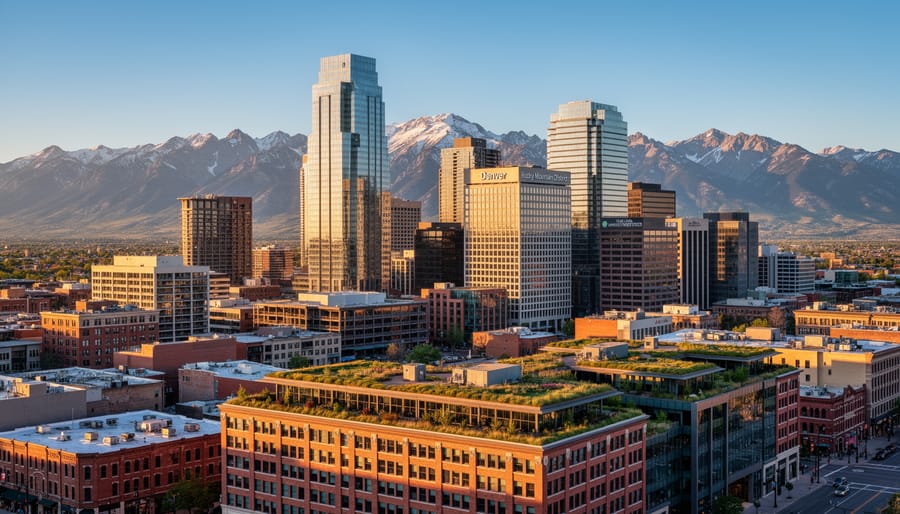
Denver’s story mirrors the environmental awakening that transformed American cities from industrial powerhouses into sustainable urban centers. Founded in 1858 during the Colorado Gold Rush, Denver evolved from a dusty frontier outpost where miners and fortune-seekers converged into what locals now call the “Mile High City”—a destination where 300 days of annual sunshine meet forward-thinking environmental stewardship.
The city’s environmental journey accelerated dramatically in the 1970s when residents witnessed the infamous “Brown Cloud”—a visible layer of smog that obscured mountain views and threatened public health. This crisis sparked a grassroots movement demanding change. Community members organized campaigns, business leaders committed to cleaner operations, and city officials implemented air quality standards that became national models. What emerged was a collaborative spirit that continues defining Denver’s approach to sustainability today.
VISIT DENVER, the city’s official tourism organization, recognized that authentic sustainability required documenting progress while mobilizing the entire hospitality sector. Their initiatives transformed hotel operations, restaurant practices, and event planning across the metro area. Local hotels now participate in comprehensive environmental audits, measuring everything from water consumption to waste diversion rates. Restaurants source ingredients from Colorado farms within a 150-mile radius, reducing transportation emissions while supporting regional agriculture.
Denver residents volunteered thousands of hours restoring urban green spaces, planting native vegetation along waterways, and educating visitors about responsible outdoor recreation. Sarah Martinez, a Denver native who coordinates neighborhood sustainability projects, explains the mindset: “We inherited these mountains and plains from previous generations—our responsibility is leaving them healthier for those who follow.”
This history reveals more than policy shifts and program launches. It demonstrates how one city’s commitment to environmental responsibility became woven into its cultural identity, attracting professionals and travelers who value destinations taking meaningful climate action.
From Gold Rush to Green Rush: Denver’s Environmental Awakening
The Mile High City’s Industrial Past
Denver’s story begins with a glittering promise that came at an environmental cost. When gold was discovered in the South Platte River in 1858, the Mile High City transformed almost overnight from prairie land into a bustling mining hub. The subsequent silver boom of the 1870s and 1880s brought immense wealth, but also introduced heavy industrial activities that would shape the region’s environmental challenges for generations.
Smelting operations processed precious metals throughout the late 1800s and early 1900s, releasing lead, arsenic, and other pollutants into the air and soil. The Globeville neighborhood, home to several major smelters, bore the brunt of this industrial legacy. Meanwhile, Denver’s strategic position as a railroad crossroads accelerated growth but also increased coal consumption and air quality concerns.
These early industrial practices left behind contaminated sites that required extensive remediation. However, understanding this history has proven essential for Denver’s transformation. Today’s sustainability advocates and city planners have turned these lessons into opportunities, developing innovative cleanup programs and green spaces where industrial sites once stood. This journey from extraction to restoration demonstrates Denver’s commitment to learning from the past while building a cleaner, more sustainable future for residents and visitors alike.
The Brown Cloud and Community Response
During the 1970s and 80s, Denver residents woke up to an unwelcome reality: a thick, brown haze that regularly blanketed their city, obscuring views of the majestic Rocky Mountains. This pollution phenomenon, dubbed the “Brown Cloud,” resulted from a combination of vehicle emissions, industrial activity, and Denver’s unique geography, which trapped pollutants in the valley during temperature inversions.
Rather than accepting poor air quality as inevitable, Denver’s community rallied together to demand change. Local activists, health advocates, and concerned parents formed grassroots organizations to raise awareness about the health impacts of air pollution, particularly on children and vulnerable populations. These groups organized public forums, engaged with city officials, and transformed what could have been a discouraging environmental crisis into a catalyst for meaningful action.
The community response led to significant policy victories. Colorado implemented some of the nation’s strictest vehicle emissions testing programs, requiring regular inspections to reduce harmful pollutants. The city invested in expanding public transportation, making it easier for residents to choose alternatives to driving. Local businesses and industries faced new regulations that limited emissions and encouraged cleaner technologies.
One particularly inspiring volunteer effort was the formation of neighborhood air quality monitoring groups. Citizens like Margaret Chen, a schoolteacher and mother of three, worked alongside scientists to document pollution levels and advocate for cleaner air policies. These volunteer-driven initiatives demonstrated that ordinary residents could drive extraordinary change.
Today, Denver’s air quality has dramatically improved, though challenges remain. The Brown Cloud era taught Denver an invaluable lesson: when communities unite around environmental concerns, they can transform their city’s future. This legacy of grassroots environmental activism continues to influence Denver’s sustainability initiatives, proving that collective action creates lasting positive change.
VISIT DENVER Program: Marketing Sustainability to the World
The Green Meetings Initiative
In 2005, VISIT DENVER took a bold step that would reshape how conventions and meetings operate across the country. Recognizing that large-scale events carried significant environmental footprints, the organization launched the Green Meetings Initiative, becoming one of the first destination marketing organizations in the nation to formalize sustainable event planning standards.
The initiative started with a simple yet powerful question: How can Denver host world-class events while protecting the natural beauty that draws visitors here in the first place? Working alongside local hotels, convention centers, caterers, and transportation providers, VISIT DENVER developed a comprehensive certification program that addressed everything from waste reduction to energy consumption.
By 2007, the program had established clear benchmarks for sustainable meetings. Event planners could now choose certified vendors committed to composting food waste, using renewable energy, and minimizing single-use plastics. The Colorado Convention Center itself became a showcase for these principles, implementing water conservation systems and achieving LEED certification.
What makes Denver’s approach particularly successful is its collaborative spirit. Local businesses didn’t just comply with standards—they innovated beyond them. Caterers began sourcing ingredients from Colorado farms, reducing transportation emissions while supporting the regional economy. Hotels introduced linen reuse programs and energy-efficient lighting.
Today, meeting planners selecting Denver gain access to a robust network of green vendors and receive practical toolkits for implementing sustainable practices. The initiative has prevented thousands of tons of waste from reaching landfills and inspired similar programs nationwide, proving that environmental responsibility and exceptional hospitality go hand in hand.
Partnership with Local Green Vendors
VISIT DENVER has cultivated meaningful partnerships with local green vendors who share the city’s commitment to environmental stewardship, creating a thriving ecosystem of sustainable tourism options. These collaborations showcase how Denver’s hospitality industry has evolved to meet the demands of environmentally conscious travelers while supporting local businesses.
The partnership program connects visitors with hotels that have achieved LEED certification or implemented comprehensive water conservation and renewable energy programs. The Oxford Hotel, one of Denver’s historic properties, exemplifies this commitment by combining century-old charm with modern sustainability practices, including solar panels and extensive recycling initiatives. Local restaurant partners feature farm-to-table menus sourcing ingredients from Colorado producers, reducing transportation emissions while supporting regional agriculture.
Tour operators participating in the program offer electric bike tours through downtown neighborhoods and carbon-neutral transportation to mountain destinations. Denver Pedicab, a volunteer-founded initiative, has grown from a single eco-friendly vehicle to a fleet serving thousands of visitors annually with zero-emission transportation. These operators receive recognition through VISIT DENVER’s promotional channels, helping sustainability-minded travelers easily identify responsible choices.
Success stories emerge regularly from these partnerships. The Green Hotel Initiative reported a collective reduction of 2.5 million gallons of water annually across participating properties, while restaurant partners diverted over 500 tons of organic waste from landfills through composting programs. These achievements demonstrate how collaborative efforts between tourism organizations and local vendors create tangible environmental benefits while enhancing visitor experiences with authentic, responsible Denver hospitality.
Measuring Impact: Tourism Meets Accountability
VISIT DENVER’s commitment to sustainability goes beyond good intentions—it’s backed by transparent tracking and reporting. The program measures environmental outcomes through comprehensive data collection, monitoring everything from waste diversion rates at conventions to carbon footprint reductions from hotel partnerships. This accountability framework helps Denver’s tourism industry understand what’s working and where improvements are needed.
Each year, participating hotels, venues, and vendors report their sustainability metrics, creating a clear picture of collective progress. For example, the program tracks water conservation efforts, energy usage reductions, and the amount of food waste redirected from landfills. These numbers aren’t just filed away—they’re shared with the community and used to celebrate achievements while identifying new opportunities.
Local sustainability coordinator Maria Chen explains: “Seeing our actual impact motivates everyone involved. When we show that Denver conventions have diverted thousands of pounds of waste or saved substantial energy, it inspires vendors and planners to push further.” This transparent approach builds trust with environmentally conscious travelers and meeting planners, proving that Denver’s green initiatives deliver real results, not just promises.
Denver’s Clean Energy Revolution: A Timeline of Achievement
Solar City: Denver’s Sunshine Strategy
Denver’s solar journey began modestly in the early 2000s, when a handful of forward-thinking homeowners and businesses installed experimental photovoltaic panels despite higher costs and limited incentives. The city’s abundant sunshine—averaging 300 days annually—made it an ideal testing ground for renewable energy initiatives, and local advocates quickly recognized the untapped potential.
A turning point came in 2006 when Denver launched its first municipal solar pilot program, installing panels on public buildings including recreation centers and libraries. These early projects demonstrated both the feasibility and financial benefits of solar energy, inspiring broader community participation. By 2010, the city had established its first renewable energy targets, committing to power municipal operations with 20% renewable sources.
The momentum accelerated dramatically after 2015, when Denver set ambitious goals to achieve 100% renewable electricity for city operations by 2030. Community solar gardens emerged throughout neighborhoods, allowing residents without suitable rooftops to participate in clean energy generation. Local volunteer Maria Rodriguez recalls helping organize solar co-ops in her neighborhood: “We knocked on doors, held information sessions, and showed neighbors how switching to solar wasn’t just good for the planet—it reduced their energy bills too.”
Today, Denver’s solar infrastructure includes thousands of residential installations, major solar arrays powering municipal buildings, and innovative programs helping low-income households access renewable energy. The city’s persistence transformed an early experiment into a thriving model for urban sustainability.
Electrifying Transportation
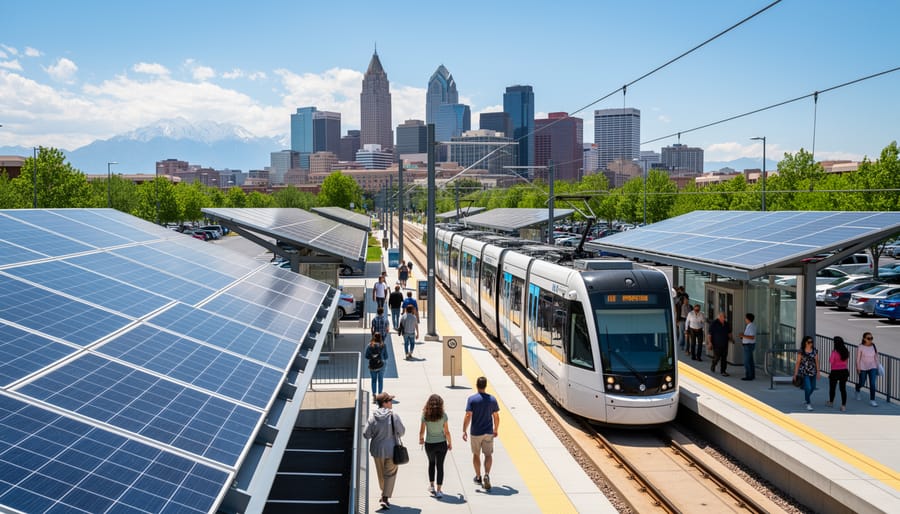
Denver’s journey toward electrifying transportation began in earnest during the early 2000s, when city planners recognized that sustainable mobility was essential for maintaining air quality in the Mile High City. The Regional Transportation District (RTD) pioneered efforts by introducing hybrid buses in 2004, marking the first major shift away from diesel-only fleets. By 2016, RTD launched the A Line, Colorado’s first electric commuter rail connecting Denver International Airport to Union Station, demonstrating the city’s commitment to clean public transit options.
The bike infrastructure transformation tells an equally inspiring story. Denver’s first protected bike lanes appeared in 2011, and the city hasn’t looked back since. Today, over 850 miles of bikeways crisscross the metro area, connecting neighborhoods to parks, workplaces, and cultural destinations.
The program continues expanding, with electric-assist bikes added in recent years to make cycling accessible across Denver’s varied terrain.
Electric vehicle adoption accelerated dramatically after 2015, when Denver committed to installing public charging stations throughout the city. Local volunteer advocacy groups, like the Colorado Electric Vehicle Coalition, played crucial roles in educating residents and pushing for infrastructure improvements. Sarah Martinez, a longtime volunteer, recalls organizing neighborhood charging station tours: “We wanted people to see how easy and practical electric vehicles could be for everyday Denver life.”
Today, Denver operates one of the largest municipal electric vehicle fleets in the country, with over 400 EVs serving city departments. The city’s comprehensive approach—combining robust public transit, extensive cycling networks, and EV infrastructure—demonstrates how urban centers can successfully transition toward sustainable transportation while maintaining accessibility for all residents.
Community Heroes: Volunteer Stories That Built Green Denver
The South Platte River Revival
In the 1970s, the South Platte River running through Denver was anything but picturesque. Decades of industrial use, pollution, and neglect had transformed it into what locals called “an open sewer.” But a remarkable grassroots movement would soon rewrite this story, demonstrating how community determination could heal even the most damaged urban waterways.
The transformation began when a coalition of concerned residents, outdoor enthusiasts, and environmental advocates refused to accept the river’s degraded state. Led by local visionary Joe Shoemaker and Greenway Foundation founder Will Fleissig, volunteers began organizing cleanup efforts in the early 1980s. These weren’t small endeavors—thousands of community members showed up with gloves and trash bags, pulling shopping carts, tires, and decades of debris from the riverbanks.
Their vision extended beyond cleanup. Working alongside city planners and engineers, volunteers helped design what would become the South Platte River Greenway, a 10.5-mile trail system connecting downtown Denver to surrounding neighborhoods. The project included habitat restoration, native plant installation, and the creation of recreation areas that would serve all residents.
Today, the greenway hosts kayakers, cyclists, and wildlife where pollution once dominated. The river corridor has become a model for urban river restoration nationwide, proving that environmental recovery succeeds when communities take ownership of their natural resources. This volunteer-driven success story continues inspiring Denver’s sustainability initiatives, showing how collective action creates lasting positive change for both people and nature.

Urban Gardens Growing Community Connections
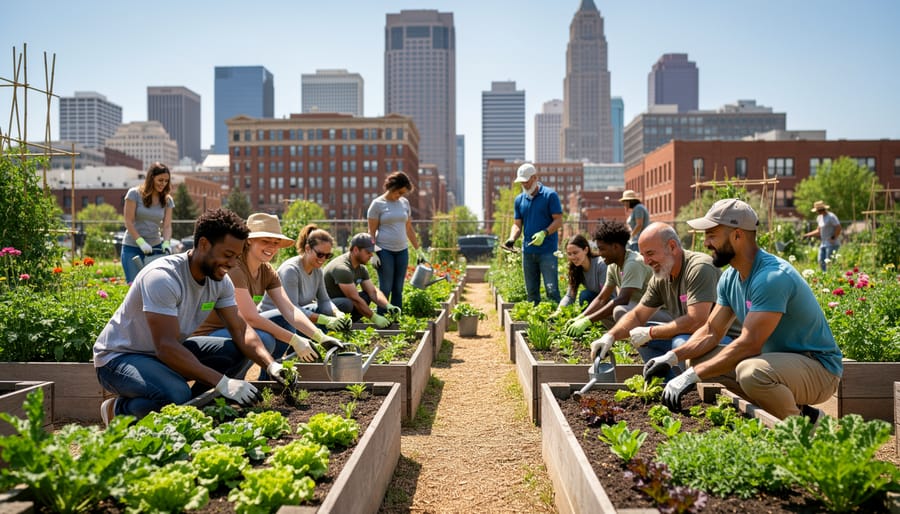
Denver’s commitment to green spaces took root at the neighborhood level through innovative community gardening initiatives that began flourishing in the late 1970s and early 1980s. These grassroots efforts transformed vacant lots and underutilized parcels into thriving gardens, creating more than just places to grow food—they became hubs where neighbors connected across cultural and generational divides.
The Denver Urban Gardens program, established in 1985, pioneered a model that would inspire cities nationwide. Starting with just a handful of plots, the initiative grew to support over 180 community gardens across the metro area, providing fresh produce access while strengthening neighborhood bonds. Local resident Maria Torres recalls joining her neighborhood garden in the Five Points area: “I came to grow tomatoes but found a second family. We shared seeds, recipes, and stories from our different backgrounds.”
These green spaces served multiple purposes beyond food production. They became outdoor classrooms where children learned about plant life cycles and nutrition, gathering spots for community celebrations, and sanctuaries of nature within urban settings. Volunteers from diverse backgrounds worked side-by-side, breaking down social barriers while cultivating shared ground.
The success of these gardens demonstrated how environmental initiatives could address multiple community needs simultaneously—improving food security, beautifying neighborhoods, promoting physical activity, and fostering social cohesion. Today, Denver’s urban gardens continue this legacy, with many incorporating sustainable practices like rainwater harvesting and composting, proving that grassroots environmental action creates lasting community transformation.
Sustainable Procurement: How Denver Changed What Cities Buy
In 2016, Denver made history by becoming one of the first major U.S. cities to adopt comprehensive sustainable procurement policies that fundamentally changed how municipal government spends taxpayer dollars. This wasn’t just about buying recycled paper—it represented a complete reimagining of government purchasing power as a tool for environmental change.
The city’s Sustainable Procurement Policy established clear standards requiring departments to evaluate environmental impact alongside cost and performance when making purchasing decisions. From office supplies to construction materials, every contract now undergoes sustainability screening. Products with recycled content, lower carbon footprints, and reduced packaging receive preference, while vendors must demonstrate environmental credentials.
The results have been transformative. Denver now purchases 100% renewable energy for municipal operations, sources locally grown food for city facilities, and requires electric or hybrid vehicles for the city fleet whenever possible. By 2020, these policies had reduced municipal waste by 35% and cut procurement-related emissions significantly.
What makes Denver’s approach particularly influential is how it leverages billions in annual purchasing power to drive market change. When a major city commits to buying sustainable products, manufacturers respond by improving their offerings. Local businesses have stepped up too—Denver’s policy includes preferences for Colorado-based green vendors, creating jobs while reducing transportation emissions.
Community advocate Maria Santos helped shape these policies through public input sessions. “We showed the city that residents wanted their tax dollars supporting companies that share our values,” she explains. “Now every purchase reflects our commitment to the environment.”
Other cities have taken notice. Denver’s procurement team regularly trains officials from municipalities nationwide, sharing templates and lessons learned. What began as a local initiative has become a blueprint for sustainable government purchasing across America, proving that everyday decisions about what we buy can create lasting environmental impact when made at scale.
What You Can Do: Join Denver’s Sustainability Movement
Denver’s sustainability movement thrives on community participation, and there are countless ways for visitors, professionals, and organizations to contribute to the city’s green future. Whether you’re planning a weekend visit, organizing a major conference, or looking to make a long-term impact, Denver welcomes your involvement.
For professionals planning events in Denver, embracing sustainability has never been easier. The city offers comprehensive support through dedicated green meeting resources that help planners reduce environmental impact while creating memorable experiences. Here’s how to plan a sustainable visit or event:
- Contact VISIT DENVER’s sustainability team to access their Green Meetings Guide and connect with certified green venues that prioritize energy efficiency, waste reduction, and local sourcing.
- Choose accommodations from Denver’s growing portfolio of LEED-certified hotels and lodges that implement water conservation programs and renewable energy initiatives.
- Partner with local caterers who source ingredients from Colorado farms and ranches, reducing transportation emissions while supporting the regional economy.
- Utilize Denver’s extensive public transportation network, including the light rail system and B-cycle bike-share program, to minimize your event’s carbon footprint.
- Incorporate volunteer opportunities into your itinerary through organizations like The Greenway Foundation or Volunteers for Outdoor Colorado, allowing attendees to give back directly to Denver’s environment.
These practical steps transform any Denver visit into a positive environmental contribution while showcasing the city’s commitment to accessible sustainability.
Supporting sustainable local businesses amplifies your impact. Denver’s thriving ecosystem of green entrepreneurs includes everything from zero-waste restaurants to eco-friendly retail shops in neighborhoods like RiNo and the Highlands. Look for businesses displaying Denver’s Green Business designation, which recognizes companies meeting rigorous environmental standards.
Volunteer programs offer hands-on ways to engage with Denver’s green initiatives. The South Platte River restoration project welcomes weekend volunteers to plant native species and remove invasive plants. Urban gardening programs like Denver Urban Gardens provide opportunities to cultivate community spaces while learning about sustainable agriculture. Many professionals find these experiences both personally rewarding and valuable for team-building.
Sarah Martinez, an event planner from Chicago, shared her experience: “Volunteering at a Denver trail maintenance project during our conference became the highlight of our trip. Attendees connected with the city in ways traditional tourism never allows.”
Whether you contribute a few hours or integrate sustainability throughout your Denver experience, your participation strengthens a movement that’s reshaping urban environmental stewardship for cities nationwide.
Denver’s environmental journey reflects a remarkable transformation driven by vision, innovation, and collective action. From its origins as a mining town that learned hard lessons about environmental stewardship to its current status as a nationally recognized sustainability leader, the city has continually evolved its relationship with the natural landscape that defines it. This story isn’t just about policy changes or infrastructure improvements, though those have been essential. It’s fundamentally about people who chose to invest in a greener future.
Today’s sustainability initiatives stand on the shoulders of decades of community advocacy, from early conservation movements to the citizen-led push for cleaner air in the 1970s. The progress made possible through programs like VISIT DENVER’s sustainability certification demonstrates how far the city has come, yet these achievements represent ongoing commitments rather than finished projects. Denver’s neighborhoods continue planting urban gardens, local businesses keep finding innovative ways to reduce waste, and volunteers dedicate countless hours to trail maintenance and waterway cleanup.
What makes Denver’s environmental story particularly compelling is its accessibility. You don’t need to be a policy expert or sustainability professional to participate. Whether you’re choosing a certified green hotel for your next visit, supporting local businesses committed to environmental practices, attending community tree-planting events, or simply exploring Denver’s trails and parks with a leave-no-trace mindset, you become part of this living history.
The path forward requires continued engagement from residents, visitors, and organizations alike. Denver’s sustainability story remains unfinished because it’s meant to be written collectively, chapter by chapter, through choices we make today that shape tomorrow’s Mile High City.