

Denver’s 2030 goal commits the city to sourcing 100 percent of its electricity from renewable sources by the end of the decade, a target that puts the Mile High City among the most ambitious climate leaders in the nation. With just four years to go, Denver has already hit 50 percent renewable electricity citywide and continues to add solar capacity, wind contracts, and community-scale battery storage at a record pace.
For professionals in sustainability and business planning this isn’t distant policy. The transition directly shapes procurement strategies, utility rate structures, and community energy programs available right now. Organizations that understand the timeline can tap into incentives, lock in favorable renewable rates, and align their operations with the grid of the near future.
The city’s approach blends large-scale utility partnerships with hyperlocal action. Xcel Energy, Denver’s primary provider, has committed to an 80 percent carbon reduction by 2030, while Denver itself invests in rooftop solar, energy efficiency retrofits, and equity-focused programs in underserved neighborhoods. Volunteers from local nonprofits have helped install solar panels on community centers, and businesses across the metro area are adopting on-site generation to reduce demand during peak hours.
This article breaks down what Denver 2030 means in practice, tracks current progress with real numbers, and offers clear steps for getting involved. Whether you’re planning a green business move or simply want to understand how your neighborhood fits into the renewable transition, the path forward is already taking shape.
What Denver 2030 Really Means
Denver’s 2030 goal means every kilowatt-hour of electricity the city uses, powering homes, offices, streetlights, and public buildings, will come from renewable sources like wind and solar. This isn’t a symbolic pledge or a distant aspiration. It’s a binding commitment adopted by Denver City Council in 2021, targeting the complete elimination of fossil fuels from the city’s electricity supply within the next four years.
The commitment applies to all electricity consumed within Denver’s municipal boundaries, affecting residential neighborhoods, commercial districts, industrial facilities, and city operations alike. When you flip a light switch in 2030, renewable energy will flow through that circuit, whether you’re in a downtown high-rise, a Highlands bungalow, or hosting a convention at the Colorado Convention Center.
This target differs fundamentally from carbon neutrality goals, which allow continued fossil fuel use offset by carbon credits or tree planting. Denver’s approach eliminates coal and natural gas from electricity generation entirely, replacing them with actual clean energy production. It’s also more focused than broader sustainability plans: while the city pursues complementary goals around transportation and building efficiency, the 2030 benchmark specifically measures renewable electricity as a percentage of total consumption.
The scope includes both electricity purchased directly from Xcel Energy, Denver’s primary utility, and power generated through distributed sources like rooftop solar panels. Every sector bears responsibility: hospitals, data centers, restaurants, schools, and manufacturing facilities all fall under this umbrella. Success requires coordination across utilities, businesses, residents, and city government, a collective effort that’s already reshaping Denver’s energy infrastructure.
The Progress We’ve Made Since Launch
Since Denver formally adopted its 100% renewable electricity goal in 2018, the city has transformed its energy landscape at a pace that surprised even optimistic projections. As of early 2026, Denver’s electricity mix stands at approximately 73% renewable, a remarkable leap from roughly 30% just five years ago. This progress reflects not just policy commitments but coordinated action across municipal operations, utility partnerships, and community participation.
The journey began with foundational infrastructure investments. Between 2019 and 2023, Denver Energy Management completed 42 megawatts of new solar capacity across city facilities, including installations at Denver International Airport, public schools, and recreation centers. The National Western Center redevelopment became a showcase project, incorporating on-site solar generation and battery storage that now serves as a model for other municipal developments.
A pivotal milestone arrived in 2022 when Xcel Energy, Denver’s primary utility provider, launched its Partners in Energy program specifically tailored to city goals. This collaboration accelerated the timeline for renewable energy procurement and grid modernization. By 2024, Xcel had retired its remaining coal-fired generation serving the Denver metro area and replaced it with a combination of wind contracts and utility-scale solar farms positioned throughout Colorado’s eastern plains.
Community solar proved particularly effective at expanding access. Denver now hosts 28 community solar gardens, serving over 12,000 subscribers who lack suitable rooftops or rental accommodations. These gardens alone contribute 18 megawatts to the city’s renewable portfolio, small individually but collectively significant.
The city also pioneered innovative financing mechanisms. Denver’s C-PACE program, which helps commercial property owners fund energy upgrades through property tax assessments, has facilitated $147 million in clean energy investments since 2020. Over 200 buildings have participated, adding both solar generation and energy efficiency measures that reduce overall demand.
These milestones demonstrate that Denver’s 2030 target, once considered aspirational, has become achievable through sustained commitment and strategic partnerships.
Where Denver’s Clean Energy Comes From
Solar Power Across the Mile High City
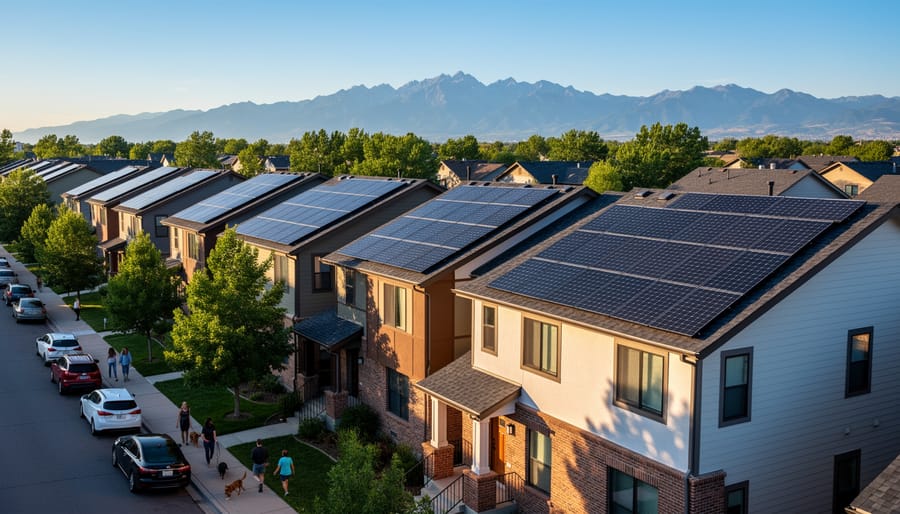
Denver’s solar landscape has transformed dramatically since the city launched its renewable energy push. Rooftop installations now dot commercial buildings throughout downtown and residential neighborhoods, contributing megawatts to the grid daily. The city’s municipal buildings lead by example, City and County facilities operate under power purchase agreements that include substantial rooftop solar arrays.
Community solar gardens have opened renewable energy access to renters and property owners without suitable roofs. These shared solar installations allow Denver residents to subscribe to a portion of a larger solar array and receive credits on their electricity bills. Over 40 community solar projects now serve Denver customers, making clean energy achievable regardless of homeownership status.
Municipal solar projects extend beyond rooftops to creative installations at water treatment facilities, parking structures, and even former brownfield sites. The Denver International Airport’s solar farms generate enough electricity to power thousands of homes annually, demonstrating how large-scale solar complements the city’s distributed rooftop strategy. Together, these initiatives form a multi-layered solar infrastructure pushing Denver steadily toward its 2030 target.
Wind Energy Partnerships
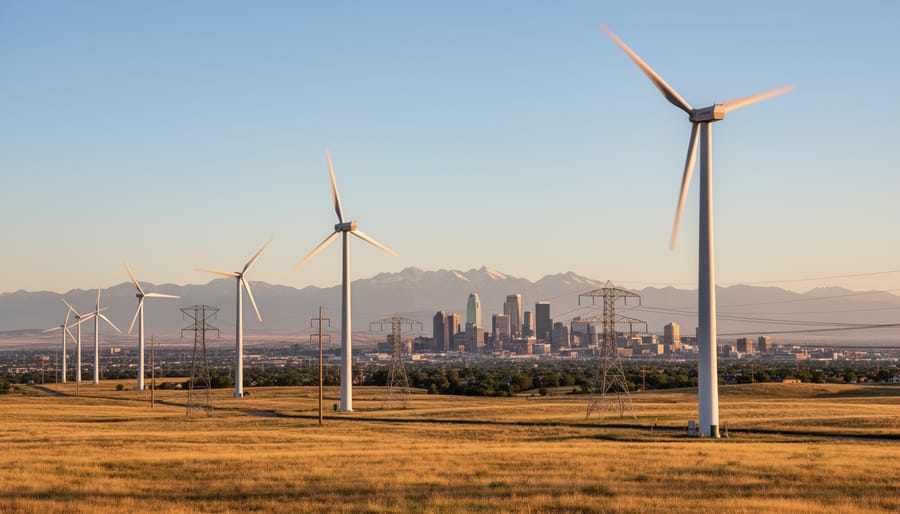
Denver doesn’t generate wind power within city limits, but it taps into some of the West’s most productive wind resources through strategic partnerships. The city sources electricity from wind farms across Colorado’s eastern plains and Wyoming, where consistent gusts turn turbines year-round.
Xcel Energy, Denver’s primary utility, operates contracts with multiple regional wind facilities that feed directly into the grid serving the metro area. These arrangements let Denver access clean energy without building its own wind infrastructure, a model that’s proven both cost-effective and scalable as the 2030 deadline nears.
Recent expansions in wind capacity mean Denver now draws a substantial portion of its renewable electricity from these partnerships. The Rush Creek Wind Farm north of Limon and additional Wyoming facilities contribute hundreds of megawatts to the city’s supply. These remote installations work in tandem with Denver’s local solar projects, balancing seasonal variations and ensuring reliable renewable power regardless of weather conditions downtown.
How This Changes Your Business and Event Planning

Denver’s renewable electricity commitment opens practical advantages for organizations operating in the city. If you run a business, host conferences, or plan corporate events here, the shift to clean power affects your operations, budgets, and marketing in tangible ways.
For meeting planners, Denver’s renewable infrastructure simplifies sustainability reporting. Hotels and convention centers increasingly run on clean electricity, letting you tick mandatory environmental criteria without complex offsets or workarounds. When booking venues for 2026 through 2030, ask about their renewable energy sources. Many facilities now document their electricity mix, giving you concrete data for post-event sustainability reports that clients and stakeholders expect. This documentation matters when bidding on contracts with organizations that prioritize environmental responsibility in their vendor selection.
Businesses can power your business through the city’s renewable grid without installing solar panels or negotiating separate clean energy contracts. Simply operating in Denver puts you closer to net-zero electricity goals. That positioning helps when competing for customers who screen vendors for sustainability practices. Marketing teams can highlight participation in Denver’s clean energy ecosystem, it’s a legitimate credential backed by city infrastructure, not greenwashing.
Event organizers gain a competitive edge when pitching Denver as a destination. Conference attendees increasingly factor sustainability into their travel decisions, and a city powered by renewables addresses those concerns upfront. Build this into proposals: quantify the clean electricity percentage your event will use, mention local renewable projects, and show how Denver’s infrastructure supports attendee values without requiring them to compromise on amenities or convenience.
The transition also stabilizes long-term energy costs as renewable sources mature, making multi-year facility leases and contracts more predictable for budget planning.
Getting Involved: Your Role in Denver 2030
Denver’s renewable energy transition thrives on community participation, and multiple pathways exist for residents, businesses, and visitors to contribute directly to the 2030 goal.
Community solar programs offer the most accessible entry point. Through Xcel Energy’s Solar*Rewards Community program, renters and homeowners without suitable roofs can subscribe to local solar gardens and receive credits on their electricity bills. Denver also partners with nonprofits like Grid Alternatives to provide solar installations for low-income households, combining environmental progress with equity. Volunteers with construction skills or simply enthusiasm regularly assist these installations, turning weekends into tangible climate action.
Businesses exploring next steps for businesses can join Denver’s Green Business Network, which provides technical assistance for energy audits, renewable procurement, and certification. Event planners can specify renewable-powered venues and work with the Denver Convention & Visitors Bureau’s sustainability team to offset remaining emissions.
Advocacy matters equally. Denver’s Office of Climate Action, Sustainability and Resiliency hosts quarterly public forums where residents shape policy priorities. Contacting city council members about expanding renewable infrastructure budgets or attending Renewable Denver Coalition meetings amplifies collective voice. Even visitors contribute by choosing hotels with renewable energy commitments and supporting restaurants that participate in clean energy programs.
The path to 2030 requires thousands of individual actions rather than waiting for top-down solutions. Whether subscribing to community solar, volunteering on installation days, or advocating for faster renewable deployment, every Denver stakeholder holds a piece of this collective commitment.
The Final Four Years: Challenges and Opportunities
With four years remaining until Denver’s 2030 deadline, the city faces genuine infrastructure challenges alongside exciting opportunities for breakthrough solutions. Grid capacity remains the most pressing technical hurdle, integrating high percentages of renewable electricity requires substantial upgrades to distribution systems, energy storage capabilities, and demand management technology.
Funding these infrastructure improvements while maintaining affordable electricity rates presents a real balancing act. Denver’s municipal utility needs to invest heavily in battery storage systems and smart grid technology without dramatically increasing costs for households already stretched by housing expenses. State and federal grant programs will play a critical role in bridging this gap.
The good news? Denver’s timeline coincides with rapidly improving battery technology and falling storage costs. What seemed expensive in 2022 becomes increasingly feasible as innovation accelerates. The city is already piloting microgrid projects in several neighborhoods, testing distributed energy systems that could scale quickly.
Community engagement represents another challenge turned opportunity. Achieving 100% renewable electricity requires widespread participation in programs like community solar and demand response initiatives. Many Denver residents remain unaware of these options or how to access them. This gap creates room for grassroots education campaigns, neighborhood energy champions, and employer-sponsored information sessions.
The pressure of approaching deadlines often sparks innovation. Denver’s final push toward 2030 is attracting clean energy startups, creating green jobs, and positioning the city as a testing ground for solutions other municipalities will eventually adopt. The race itself generates momentum that might not exist with a more distant target.
Denver’s journey to 100% renewable electricity by 2030 isn’t just a policy goal, it’s a community movement that’s already reshaping how we power our lives. From solar panels glinting on neighborhood rooftops to wind energy flowing through the grid, the benefits are visible every day: cleaner air, lower emissions, and a resilient energy system that protects against price volatility.
The next four years will determine whether Denver becomes a national model for urban renewable energy. That outcome depends on all of us. Whether you’re a business owner exploring solar installations, an event planner marketing sustainable venues, or a resident joining a community solar garden, your participation accelerates this transformation.
The infrastructure is being built. The partnerships are in place. What’s needed now is collective action, choosing renewable energy when available, advocating for continued investment, and sharing success stories that inspire others. Denver 2030 succeeds when businesses, residents, and visitors work together toward shared prosperity powered by clean electricity.
Your role in this energy transition starts with a single decision. Make it today, and help write the next chapter of Denver’s sustainable future.