

Sourcing local and sustainable food in Denver means selecting ingredients grown or raised within Colorado’s Front Range while prioritizing practices that protect soil health, conserve water, and support fair labor. For event planners and hospitality professionals, this translates to partnering with farms within a 150-mile radius that use organic methods, regenerative agriculture, or verified humane animal welfare standards. Denver’s food system makes this practical: over 200 producers now supply restaurants, caterers, and venues through established distribution networks, seasonal markets, and direct farm relationships.
The demand is real. More than 60% of Denver event attendees surveyed in 2025 said they expect sustainable food options, and corporate clients routinely include local sourcing in RFP requirements. Denver’s sustainability leadership has created infrastructure to match that expectation, from city purchasing policies that favor local vendors to certification programs that verify environmental claims.
What makes Denver different is access. The metro area sits at the center of Colorado’s agricultural belt, surrounded by vegetable farms in Boulder County, ranches on the Eastern Plains, and specialty producers in mountain valleys. Seasonal availability shapes menus here, but the variety is broader than many assume. Winter root vegetables, year-round greenhouse greens, grass-fed beef, and artisan dairy all come from within the region.
This guide walks through the definitions, identifies vetted suppliers, explains step-by-step sourcing processes, and shares real examples from Denver venues already doing this work successfully.
What Makes Food Sourcing Both Local and Sustainable
In Denver’s food system, “local and sustainable” isn’t a single standard, it’s two overlapping commitments that together define responsible sourcing.
Local typically means food grown or produced within Colorado’s borders, though many Denver buyers narrow this to the Front Range corridor or a 150-mile radius. This geography includes urban farms in the city itself, vegetable operations in Boulder and Larimer counties, orchards on the Western Slope, and cattle ranches in the Arkansas Valley. The closer the source, the fresher the product and the lower the transportation emissions. Urban agriculture, rooftop gardens, community plots, and small-scale greenhouses, pushes the concept of local to its logical extreme: food grown within the city limits and delivered the same day.
Sustainable describes how that food is produced. In Denver’s semi-arid climate, water conservation tops the list of sustainability concerns. Farmers using drip irrigation, cover cropping, and soil-building practices qualify as sustainable even without formal certification. Organic certification matters, but so do regenerative agriculture techniques that restore soil health and sequester carbon. Minimal packaging, renewable energy use on farms, and fair labor practices round out the sustainability picture.
Denver’s unique geography and climate shape what sustainability means here. A Colorado peach shipped 100 miles uses far less water and fuel than an identical peach trucked from California. A lettuce grower on the Front Range practicing water-efficient irrigation and composting meets both criteria: local by distance, sustainable by method.
For planners and vendors, this dual framework provides clear sourcing priorities. Seek Colorado producers first, then verify their growing practices. Ask about water use, soil health, and waste reduction, not just whether they carry an organic seal. The best suppliers can describe exactly how they meet both standards.
Denver’s Local Food Infrastructure
Urban Farms and Community Gardens
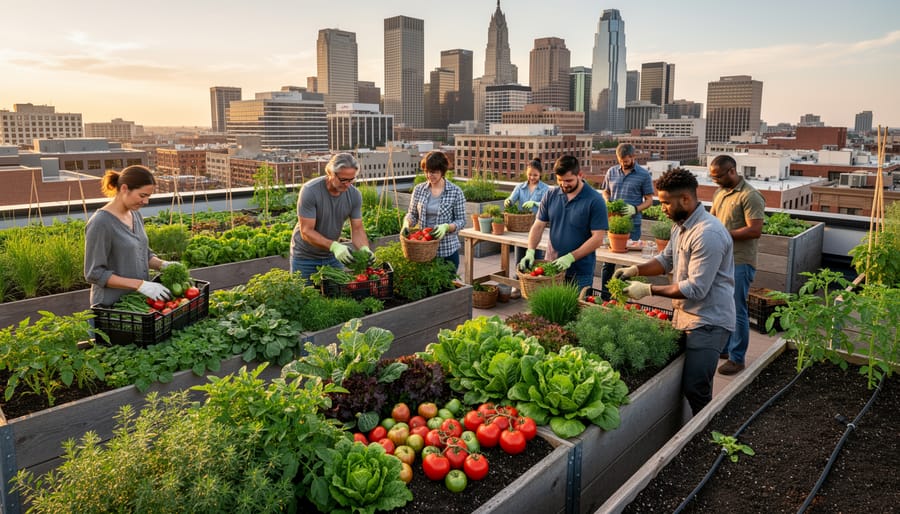
Denver’s urban agriculture footprint has expanded to more than 200 community gardens and a growing number of commercial urban farms that transform vacant lots, rooftops, and underutilized spaces into productive growing areas. The Denver Urban Gardens network alone manages over 180 community garden sites across the city, collectively cultivating approximately 28 acres where residents grow vegetables, herbs, and fruit for personal consumption and neighborhood distribution.
Several commercial operations demonstrate the viability of city-center food production. Altius Farms operates a 6,000-square-foot rooftop greenhouse atop the Whole Foods in LoHi, producing lettuce and microgreens year-round that go directly to the store below. GrowHaus in Elyria-Swansea combines an indoor aquaponics farm with a food hub and healthy food market, growing 6,000 pounds of produce annually while serving a neighborhood historically classified as a food desert.
Neighborhood-scale projects like the Garden Resource Program Demonstration Garden in Park Hill and the Westwood Food Cooperative’s urban farm show how community-driven agriculture integrates food production with education and economic development. These sites provide not just fresh produce but also job training, volunteer opportunities, and models for replicating urban growing throughout Denver’s diverse neighborhoods.
Front Range and Regional Producers
Denver’s farm-to-table movement draws from a productive 150-mile radius that spans multiple growing regions, each contributing different crops and products throughout the year. Boulder County farms supply leafy greens, root vegetables, and berries from spring through fall, while the Arkansas Valley, southeast of Denver along the Arkansas River, provides melons, peppers, tomatoes, and sweet corn during peak summer months. Western Slope orchards in the Grand Valley and Delta County deliver stone fruits, apples, pears, and wine grapes from July through October.
This geographic diversity extends Denver’s local food season considerably. While the Front Range’s semi-arid climate and 5,280-foot elevation create a shorter growing season than coastal regions, the surrounding valleys operate at different elevations and microclimates. Producers near Fort Collins harvest cold-hardy crops like kale and carrots into November, and high-tunnel operations across the region now grow lettuce and herbs through winter months.
Many of these farms have established wholesale relationships with Denver restaurants, institutions, and distributors, making them accessible to event planners who want Colorado-grown ingredients without managing dozens of individual farm relationships. Several operations are certified organic or practice regenerative agriculture, addressing both the local and sustainable criteria that define Denver’s food sourcing standards.
Distribution and Aggregation Networks
Getting local food from farm to table requires more than just willing producers, it needs reliable middlemen who understand both sustainability values and the logistics of feeding hundreds at an event. That’s where Denver’s distribution networks come in.
Food hubs act as aggregators, collecting products from multiple small farms and delivering consolidated orders to restaurants, caterers, and event venues. Denver’s regional food hubs coordinate harvest schedules, handle cold storage, and manage the paperwork that individual farms can’t always tackle alone. For an event planner ordering heritage tomatoes, grass-fed beef, and artisan cheese from three different producers, the hub does the coordination.
Cooperative distributors like locally owned wholesalers pool buying power while maintaining direct relationships with growers. They often provide product traceability, you can ask where your kale came from and get a farm name, not just a county. Some cooperatives specialize in certified organic or regenerative products, simplifying verification for venues with strict sustainability commitments.
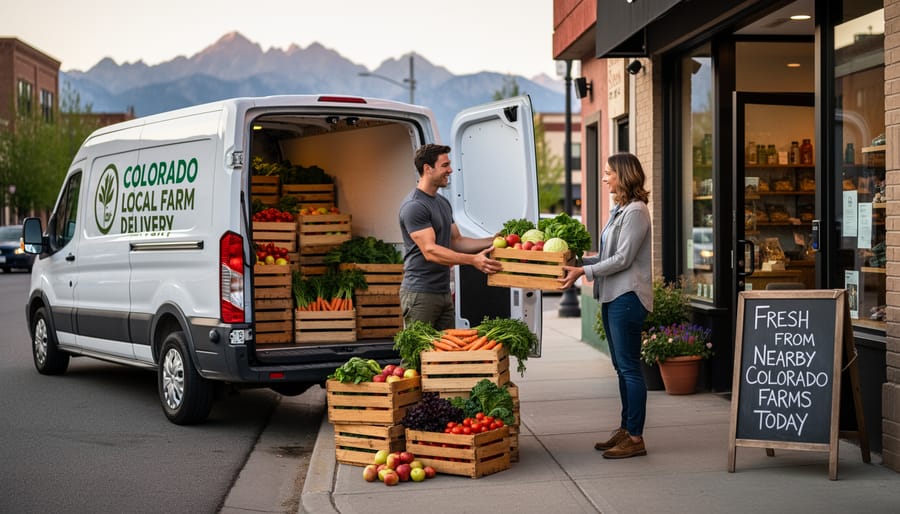
Direct-from-farm delivery services have exploded in Denver, especially post-pandemic. Farms now offer weekly drop-off routes to commercial kitchens, cutting out additional handling and keeping more revenue with the grower. For regular events or hotel restaurants, standing orders with a farm route create consistency and deepen producer relationships, you’re not just buying carrots, you’re supporting a specific family’s operation thirty miles east of the city.
How Planners and Organizations Can Source Locally in Denver
Sourcing local and sustainable food for Denver events and operations requires intentional planning, but the city’s infrastructure makes it achievable. Start by building relationships early, don’t wait until two weeks before your conference to contact farms or food hubs. The strongest local sourcing programs begin with vendor partnerships cultivated months in advance.
Here’s a practical approach that Denver planners have refined through experience:
- Assess your event calendar and seasonal availability. Review Colorado harvest schedules to understand what’s abundant when. Summer conferences can feature peak-season tomatoes, squash, and greens; winter events work well with root vegetables, stored grains, and greenhouse produce. Align your event dates with local growing cycles when possible.
- Identify certified local vendors and verify their practices. Look for suppliers with Colorado Proud certification, organic credentials, or participation in Denver food hubs. Request documentation of farming practices, sourcing radius, and sustainability commitments. Reputable vendors provide transparency about where food originates and how it’s grown.
- Design flexible menus around harvest realities, not fixed expectations. Work with caterers who can pivot based on what’s actually available. A menu listing “seasonal Colorado vegetables” gives your chef room to source the freshest local produce rather than forcing December tomatoes. Build in substitution options and communicate menu flexibility to attendees upfront.
- Request detailed sourcing documentation for reporting and storytelling. Ask vendors for farm names, distances, and sustainability certifications you can share with attendees. Many Denver organizations track metrics like pounds of local food purchased, miles reduced, and dollars invested in regional agriculture, data that strengthens future sustainability proposals.
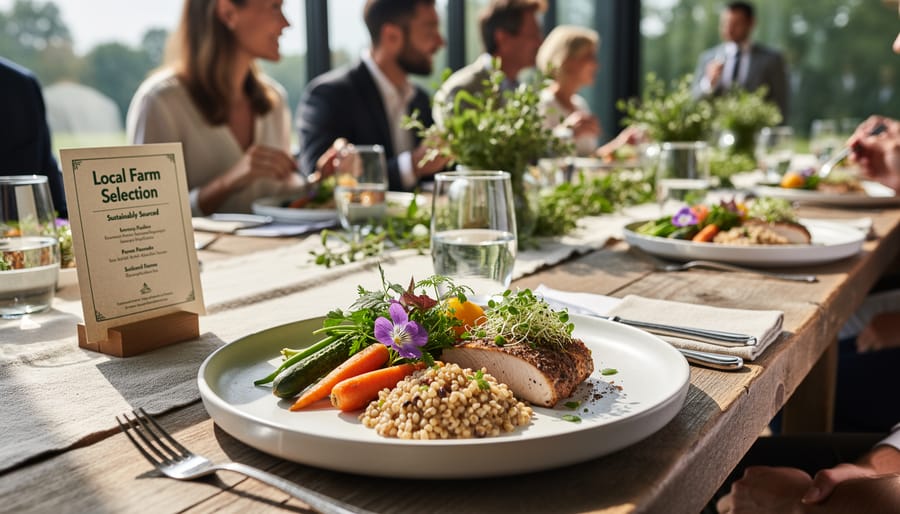
- Communicate the local sourcing story to create attendee engagement. Feature farm profiles in conference materials, include table tents identifying local producers, or invite a farmer for a brief presentation. Attendees value knowing their meal supports Colorado agriculture and aligns with broader sustainability goals like clean energy for businesses.
Cost concerns are common, but local sourcing doesn’t automatically mean higher expenses. Buying seasonally abundant produce often costs less than out-of-season imports. Many Denver farms offer wholesale pricing for bulk institutional orders, and reducing food waste through better planning offsets ingredient costs.
Building a reliable network takes one or two event cycles, but once established, local sourcing becomes routine rather than complicated. Denver’s food hub staff, sustainability coordinators at venues, and experienced green caterers can guide first-time planners through vendor selection and menu design, turning sustainable sourcing from an aspiration into standard practice.
Denver’s Sustainable Procurement Policies and Programs
Denver has embedded local food priorities directly into city operations through concrete procurement policies and financial incentives. The city’s Sustainable Food Policy, adopted in 2018, sets targets for municipal facilities to source 20% of food from Colorado producers by 2025, with ongoing expansion planned through 2026. This applies to cafeterias in city buildings, public events, and city-sponsored conferences, creating steady demand that planners and green vendors can tap into.
The farm-to-institution framework extends beyond city facilities. Denver Public Schools has committed to purchasing local products when prices fall within 10% of conventional alternatives, and Denver Health’s cafeterias prioritize Front Range suppliers that meet sustainability criteria. These institutional buyers collectively represent millions in annual food spending, making them anchor customers for regional farms.
Financial support comes through the Denver Food System Fund, which provides grants for cold storage upgrades, delivery infrastructure, and processing equipment that help small producers scale up to meet institutional demand. In 2025, the fund distributed $180,000 across twelve projects, including a mobile processing unit that now serves urban farms citywide.
The Office of Climate Action, Sustainability, and Resiliency coordinates between city departments, food hubs, and private-sector planners through quarterly supplier forums. These gatherings connect caterers and event venues with verified local producers, share procurement best practices, and troubleshoot logistics. For organizations planning conferences or conventions, the office maintains a database of local food vendors that meet both geographic and sustainability standards, streamlining the sourcing process and ensuring alignment with Denver’s climate goals.
Success Stories: Denver Venues and Vendors Leading the Way
Denver’s hospitality and events sector demonstrates that local and sustainable sourcing isn’t just aspirational, it works at scale. The Crawford Hotel at Union Station partners with more than fifteen Colorado farms and ranches, dedicating 40% of its menu to ingredients grown within 150 miles. Chef Alex Seidel tracks every dollar spent locally, reporting that the hotel redirected $180,000 to Front Range producers in 2025 while cutting food waste by 32% through seasonal menu planning and root-to-stem cooking.
Event planner Maria Torres runs Verde Gatherings, a Denver catering company that sources exclusively from Colorado producers. “We built relationships with eight urban farms in the Five Points and Globeville neighborhoods,” she explains. “For a 200-person corporate conference last spring, we served salad greens harvested that morning from ReVision Urban Farm and bread from a baker using Colorado-milled wheat. Clients saw the farm names on menu cards and asked how they could support those growers directly.” Verde Gatherings now donates surplus prepared food to Metro Caring, diverting 1,200 pounds from landfills in 2025 and connecting its sourcing practices to broader community climate resilience goals.
The Denver Botanic Gardens operates a volunteer-driven harvest program at its York Street location, where community members pick produce for the on-site café and donate overflow to food banks. Last season, 40 volunteers contributed 320 hours and harvested 900 pounds of vegetables, turning the gardens into a working model of urban food production. Executive Chef Paula Dowd incorporates those ingredients into event menus, giving guests a direct connection to Denver’s growing landscape.
These stories share common threads: transparent supplier relationships, measurable waste reduction, reinvestment in local economies, and community engagement that extends beyond the plate.
Common Questions About Local Food Sourcing in Denver
Sourcing local and sustainable food in Denver raises practical questions, especially for planners managing budgets, timelines, and diverse attendee needs. The most common concerns focus on seasonal constraints, costs, supplier verification, and how to measure success.
How does seasonality affect menu options in Denver?
Colorado’s growing season peaks May through October, so winter menus rely more on storage crops like root vegetables, grains, and preserved items, plus greenhouse and hothouse production. Planners who embrace seasonal variety find creative solutions, roasted squash in November, fresh greens from urban farms year-round, rather than forcing out-of-season items.
Is local food always more expensive?
Not necessarily. Direct-from-farm purchasing often cuts middleman costs, and seasonal abundance can lower prices below conventional suppliers. Where premiums exist, they’re usually modest and offset by reduced waste, higher quality, and the marketing value of local sourcing.
How can I verify a vendor’s sustainability claims?
Ask for certifications like USDA Organic, Certified Naturally Grown, or Food Alliance, and request farm visit opportunities. Reputable suppliers welcome transparency and can explain their practices in detail.
What if attendees require foods not grown locally?
Balance is key. Source Colorado staples for the foundation of your menu, then supplement with sustainably certified items from outside the region for dietary needs, cultural dishes, or specialty requests, no one expects 100 percent local sourcing in every scenario.
Tracking local sourcing percentages requires simple record-keeping: calculate the dollar value or weight of local ingredients as a share of total food purchases. Many Denver venues now report these figures in sustainability dashboards, and food hubs often provide invoices pre-tagged by origin to simplify the math. The effort pays off when you can tell attendees that 60 percent of their meal came from within 150 miles, turning an abstract commitment into a tangible story.
Denver’s farm-to-table ecosystem isn’t just a trend, it’s infrastructure, policy, and community working together. The city has built systems that make local and sustainable sourcing practical and scalable for everyone from convention centers to neighborhood caterers.
If you’re planning an event or managing a venue, start small. Reach out to one of Denver’s food hubs for a sourcing conversation. Visit the Union Station Farmers Market to meet growers face-to-face. Join networks like the Colorado Restaurant Association’s sustainability committee or the Denver Food Policy Council, where vendors and planners share what actually works.
Every local purchase supports Front Range farmers, keeps food dollars circulating in Colorado, and reduces the carbon footprint of your operation. When you choose producers practicing regenerative agriculture and water conservation, you’re contributing to the region’s long-term food security in a changing climate.
Local sourcing also strengthens Denver’s identity as a destination where sustainability is authentic, not performative. It connects directly to the city-wide sustainability goals that guide everything from municipal procurement to renewable energy targets, goals that position Denver as a leader among mountain cities.
The infrastructure exists. The suppliers are ready. Now it’s your turn to join Denver’s farm-to-table movement.