

Sustainable 3D printing uses additive manufacturing technology to create objects layer by layer while minimizing waste, energy consumption, and environmental impact through eco-friendly materials and efficient production processes. Unlike traditional manufacturing that cuts away excess material, 3D printing deposits only what’s needed, turning digital designs into physical products with dramatically less scrap and a smaller carbon footprint.
This technology matters because it’s reshaping how communities approach local production, circular economies, and resource conservation. Manufacturing traditionally relies on long supply chains, mass production, and significant material waste. 3D printing flips that model by enabling on-demand creation close to where products are needed, using biodegradable plastics, recycled materials, and even waste byproducts as feedstock.
Cities like Denver are already demonstrating how sustainable 3D printing fits into broader environmental goals. Denver’s green leadership includes support for advanced manufacturing hubs where businesses and makerspaces experiment with plant-based filaments and closed-loop recycling systems. Local organizations have printed everything from community garden infrastructure to prototype housing components using materials that break down naturally or get reprocessed into new prints.
This article explains what makes 3D printing sustainable, how the process actually works to reduce environmental harm, the types of materials and methods driving the greenest outcomes, and where you’ll see this technology making a tangible difference in 2026. Whether you’re a sustainability planner evaluating new tools, a green business owner exploring manufacturing options, or an advocate curious about emerging solutions, understanding the environmental potential of additive manufacturing will help you make informed decisions about its role in your community’s climate action strategy.
What 3D Printing Sustainability Means
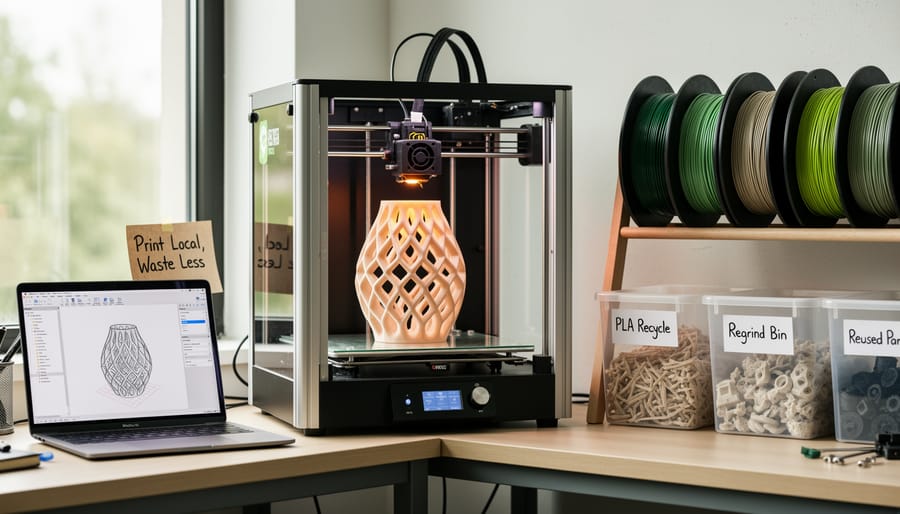
Sustainable 3D printing refers to additive manufacturing practices that minimize environmental harm while creating functional objects. Unlike traditional manufacturing, which cuts, drills, or molds material and discards the excess, 3D printing builds objects layer by layer, using only what’s needed for the final product. This fundamental difference transforms how we think about production, waste, and resource efficiency.
At its core, the sustainability advantage comes from three factors: precision material use, on-demand production, and decentralized manufacturing. A conventional factory might cut a part from a large sheet of metal or plastic, throwing away 40-60% as scrap. A 3D printer deposits material exactly where the design requires it, often wasting less than 5%. That precision translates directly into fewer raw materials extracted, processed, and eventually landfilled.
The on-demand aspect matters just as much. Traditional manufacturing relies on economies of scale: make thousands of units to justify the setup cost, then warehouse them until needed. 3D printing flips that model. You print what you need, when you need it, eliminating storage, unsold inventory, and the energy required to maintain warehouses. For event planners and organizations, this means custom fixtures, signage, or components without ordering excess stock that becomes waste after a single use.
Localized production adds another sustainability layer. Instead of shipping finished goods across continents, you can print parts where they’re needed using digital files. A Denver maker space can produce the same item a factory in Asia would have manufactured, cutting transportation emissions and supporting the local green economy. The environmental benefit isn’t automatic, material choice and energy source still matter, but the structural advantages create a foundation for genuinely sustainable manufacturing practices.
How Sustainable 3D Printing Works
Material Efficiency and Waste Reduction
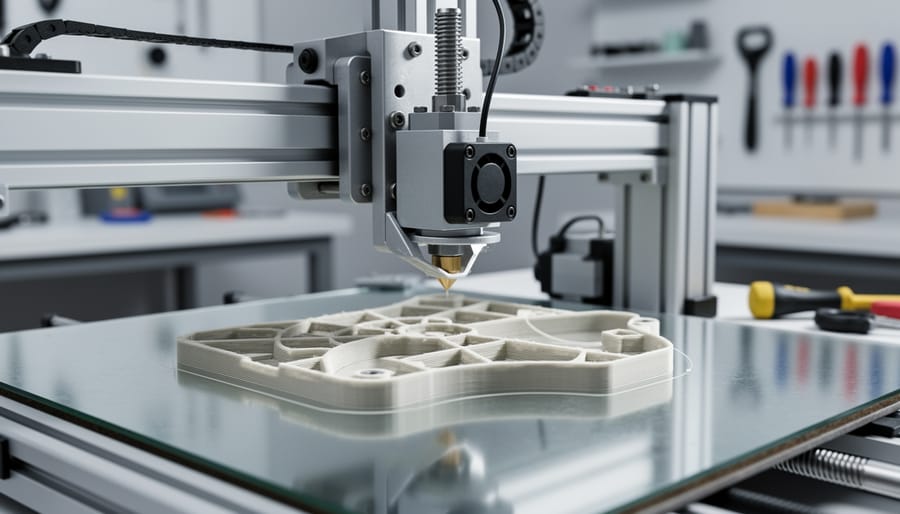
Traditional manufacturing methods often start with a large block of raw material and cut, drill, or carve away everything that isn’t needed, creating significant waste. Machine shops routinely discard 40 to 90 percent of the material they begin with, depending on the complexity of the part. That waste goes to landfills or recycling centers, adding transportation emissions and processing energy to the environmental cost.
3D printing flips this model. Instead of removing material, the printer deposits only what the finished object requires. A bracket that weighs 200 grams uses 200 grams of filament, not a kilogram of metal stock trimmed down. This layer-wise production reduces waste to nearly zero during the build itself, failed prints and support structures are the main byproducts, and even those can often be reused.
Many eco-friendly filaments are designed for a circular life cycle. PLA and other plant-based plastics can be composted under industrial conditions, while recycled PET and reclaimed materials give post-consumer waste a second purpose. Some Denver maker spaces collect failed prints and grind them into new filament, closing the loop entirely and keeping material out of the waste stream.
Energy and Resource Considerations
Energy consumption in 3D printing varies significantly based on machine type, print duration, and material selection. Desktop FDM printers typically draw between 50 and 250 watts during operation, comparable to a laptop, while industrial systems can consume several kilowatts. However, these numbers require context: traditional manufacturing often involves multiple energy-intensive steps (casting, machining, assembly), whereas 3D printing consolidates production into a single process.
Print time directly affects total energy use. A simple prototype might finish in two hours, while complex parts can run for days. Optimizing print settings, layer height, infill density, speed, reduces both time and power draw without sacrificing quality. Material choice matters too: PLA melts at lower temperatures than ABS or nylon, requiring less heating energy per layer.
The sustainability equation improves when shops pair efficient machines with renewable energy for businesses as many Denver facilities now do. On-demand production eliminates the energy cost of warehousing and long-distance shipping inherent in traditional supply chains. For small-batch manufacturing and custom parts, 3D printing’s consolidated workflow often delivers a smaller total footprint than conventional methods, especially when waste reduction and material efficiency factor into the full lifecycle analysis.
Types of Sustainable 3D Printing Methods
Eco-Friendly Materials and Filaments
The most accessible eco-friendly filament remains PLA (polylactic acid), derived from renewable resources like corn starch or sugarcane. It biodegrades under industrial composting conditions and requires lower printing temperatures than petroleum-based plastics, reducing energy use. In 2026, improved PLA blends offer better strength and heat resistance while maintaining their environmental advantages.
Recycled materials have matured significantly. rPET filament, made from reclaimed plastic bottles, diverts waste from landfills while delivering quality prints suitable for functional parts and prototypes. Some manufacturers now produce filaments from ocean plastic and post-consumer waste, creating tangible connections between waste reduction and production.
Plant-based resins for resin printers include soy-based and algae-derived options that eliminate petroleum derivatives. These materials work with standard equipment while offering comparable print quality to conventional resins.
Wood-filled filaments blend PLA with sawdust or wood fibers from lumber industry byproducts, creating prints with natural aesthetics and reducing pure plastic content. Hemp-based and mushroom-derived filaments represent emerging alternatives that combine biodegradability with unique material properties.
When selecting materials, verify manufacturer claims about biodegradability and recycled content. True composting requires industrial facilities, not home conditions, and performance varies by application.
Closed-Loop and Circular Systems
Closed-loop systems turn 3D printing waste back into usable material, creating a circular economy within the manufacturing process. When a print fails or produces scrap, companies and maker spaces can grind the plastic into pellets or flakes, then extrude it into fresh filament. Some manufacturers now offer take-back programs where users return used prints and supports, which are then reprocessed and sold as recycled filament.
This approach dramatically cuts waste sent to landfills. A Denver maker space running a closed-loop program, for example, can reuse up to 95% of failed prints. The recycled filament performs nearly as well as virgin material for many applications, though it may require testing for color consistency and strength. Desktop filament recyclers have become more affordable, allowing small businesses and community workshops to close the loop themselves rather than relying on external vendors.
Real-World Applications of Sustainable 3D Printing
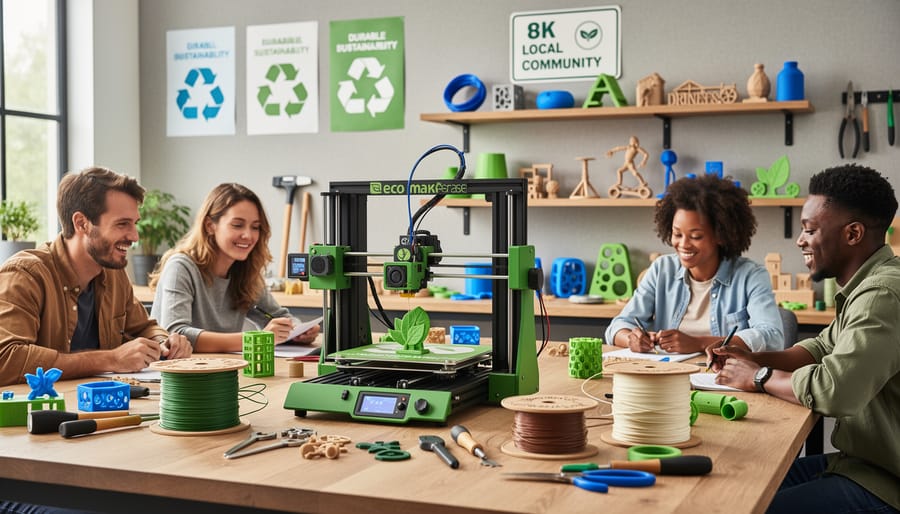
Sustainable 3D printing has moved far beyond prototyping labs. Across industries, it’s delivering real environmental and economic benefits, cutting waste, shortening supply chains, and enabling production models that traditional manufacturing can’t match.
In construction, companies are printing building components and even entire structures using recycled concrete mixtures and bio-based composites. These projects reduce material waste by up to 60% compared to conventional methods while cutting transportation costs by producing elements on-site. Several affordable housing initiatives have adopted 3D-printed wall systems that require fewer resources and generate minimal scrap.
Manufacturing operations use sustainable 3D printing to produce spare parts on-demand rather than warehousing inventory. A Denver-based outdoor gear company now prints replacement buckles and fasteners from recycled nylon only when customers need them, eliminating the waste of overproduction and extending product lifespans. This approach aligns with community clean energy goals by reducing the carbon footprint of shipping and storage.
Healthcare facilities are printing patient-specific surgical guides and prosthetic components using biocompatible, sterilizable materials. These custom devices improve outcomes while using only the exact amount of material each case requires.
Current applications include:
- Prototyping and product development with biodegradable filaments
- Spare parts on-demand to eliminate inventory waste
- Construction components from recycled aggregates and bio-composites
- Community maker spaces offering access to eco-friendly printing technology
- Local manufacturing hubs supporting small-batch, just-in-time production
Community projects demonstrate the technology’s accessibility. Maker spaces across Denver provide residents with access to 3D printers loaded with PLA and recycled materials, enabling neighbors to repair household items, create gardening tools, and prototype solutions to local challenges. One west Denver collective printed over 200 planter boxes from reclaimed plastic last year, transforming vacant lots into urban gardens without purchasing new materials.
3D Printing Sustainability in Denver’s Green Economy
Denver’s green economy is embracing sustainable 3D printing across maker spaces, event venues, and forward-thinking businesses. Local organizations are discovering that additive manufacturing aligns perfectly with the city’s renewable energy goals and waste-reduction targets.
Several Denver maker spaces now offer workshops on sustainable 3D printing, teaching community members to work with biodegradable filaments and recycled materials. These facilities provide access to equipment that small businesses and event planners might not own, democratizing the technology while building local expertise.
Event venues are using 3D printing to create custom, reusable décor and signage rather than ordering disposable items from distant suppliers. One downtown conference center prints modular booth components from recycled PLA, storing and reconfiguring them for different events throughout the year. This approach cuts shipping emissions, eliminates single-use waste, and supports the venue’s sustainability certifications.
Green vendors are integrating the technology into product lines, printing promotional items, packaging prototypes, and small-batch manufacturing runs locally rather than importing mass-produced alternatives. By pairing 3D printing with renewable power sources, these businesses reduce their carbon footprint while maintaining production flexibility.
The technology also complements Denver’s broader infrastructure investments. Just as advancements in energy storage in Denver support the grid transition, distributed 3D printing reduces transportation energy by producing goods where they’re needed.
For planners and organizations, this ecosystem offers practical entry points, partnering with local maker spaces, sourcing custom items from green vendors already equipped for sustainable printing, or piloting small projects that demonstrate the technology’s event and operational benefits.
Getting Started: How Planners and Organizations Can Use 3D Printing Sustainably
Starting with sustainable 3D printing doesn’t require a massive investment or technical expertise, Denver planners and organizations can integrate this technology at the pace that fits their needs. The key is to begin with a clear use case: whether you’re producing custom signage for a green conference, creating reusable components for recurring events, or prototyping eco-friendly product designs, knowing what you want to print helps you select the right equipment and materials.
For many organizations, partnering with existing resources makes more sense than purchasing equipment outright. Denver’s maker spaces and community fabrication labs often offer access to sustainable 3D printing equipment, training, and expert advice. This collaborative approach lets you test projects, learn the workflow, and determine your actual needs before committing to capital expenditures. When you do purchase equipment, prioritize machines with good energy efficiency ratings and compatibility with recycled or biodegradable materials.
Material sourcing deserves careful attention. Look for PLA and other bio-based filaments certified by recognized environmental standards, and seek out suppliers who offer recycled options or take-back programs for failed prints. Buying locally when possible reduces transportation emissions and supports Denver’s green economy.
Here are practical steps to implement sustainable 3D printing:
- Partner with local maker spaces to access equipment and expertise before investing in your own setup
- Source certified sustainable materials like PLA from suppliers with verified environmental credentials
- Design objects for minimal support structures and material waste, optimizing print settings for efficiency
- Explore rental or leasing options rather than purchasing if your printing needs are occasional
- Train staff or recruit knowledgeable volunteers who can operate equipment and troubleshoot issues
Integrate 3D printing into your green procurement policies by setting standards for material sourcing, establishing waste reduction targets, and tracking the environmental benefits compared to conventional manufacturing. Document successes and share lessons learned with Denver’s sustainability community, your experience helps others adopt these practices more quickly and effectively.
Common Questions About Sustainable 3D Printing
Is sustainable 3D printing truly greener, or just another technology promise? Planners, advocates, and businesses considering this innovation often share similar concerns about cost, practicality, and real environmental impact. Here are answers to the questions we hear most often from the Denver sustainability community.
Is 3D printing really more sustainable than traditional manufacturing?
Yes, when used appropriately. Additive manufacturing eliminates much of the material waste inherent in cutting or molding processes, and localized production reduces transportation emissions. However, sustainability depends on choosing renewable materials, optimizing print settings for energy efficiency, and ensuring items serve a genuine purpose rather than becoming novelty waste.
What 3D printing materials are safest for the environment?
PLA derived from renewable sources like corn starch is biodegradable under industrial composting conditions and releases fewer volatile compounds during printing. Recycled PETG and newer plant-based resins offer similar benefits. Avoid materials containing heavy metals or persistent microplastics unless you have proper containment and disposal systems in place.
How much does sustainable 3D printing cost to start?
Desktop printers using eco-friendly filaments start around $300 to $500, with material costs of $20 to $40 per kilogram. For event applications or organizational use, budget $1,000 to $3,000 for a reliable system including sustainable materials, and factor in learning time. Many Denver maker spaces offer access and training at lower entry costs.
Can 3D printed items be recycled or composted?
PLA breaks down in industrial composting facilities but not in home compost bins or landfills. Some filament manufacturers accept failed prints for reprocessing, and local recycling programs are emerging. Always check material specifications and local disposal options before printing at scale.
For green event planners specifically, the technology fits best when producing custom signage, reusable fixtures, or small-batch items that would otherwise require shipped single-use products. The key is intentionality: print what serves a clear function, choose materials with verified environmental credentials, and connect with Denver’s network of sustainable makers who can guide material selection and end-of-life planning. Starting small with a pilot project lets you test both the practical workflow and the actual resource savings before committing to larger initiatives.
Sustainable 3D printing represents more than a manufacturing method, it’s a tangible step toward reducing waste, conserving resources, and building a circular economy that Denver’s green community is actively shaping. As you’ve seen throughout this guide, the technology offers practical solutions for planners, businesses, and organizations committed to environmental stewardship, from biodegradable materials to closed-loop recycling systems that keep plastic out of landfills.
Denver’s maker spaces, green vendors, and sustainability-focused organizations are already demonstrating how additive manufacturing can support local innovation while reducing environmental impact. Whether you’re planning an eco-conscious event, exploring new procurement strategies, or simply curious about how emerging technologies align with your sustainability values, 3D printing offers accessible entry points.
Consider connecting with local groups working on green technology projects, volunteering with community makerspaces, or reaching out to Denver vendors who prioritize sustainable practices. Small shifts in how we create, produce, and consume add up. By integrating sustainable 3D printing into your operations or supporting those who do, you contribute to a resilient, forward-thinking community where innovation and environmental responsibility move forward together.